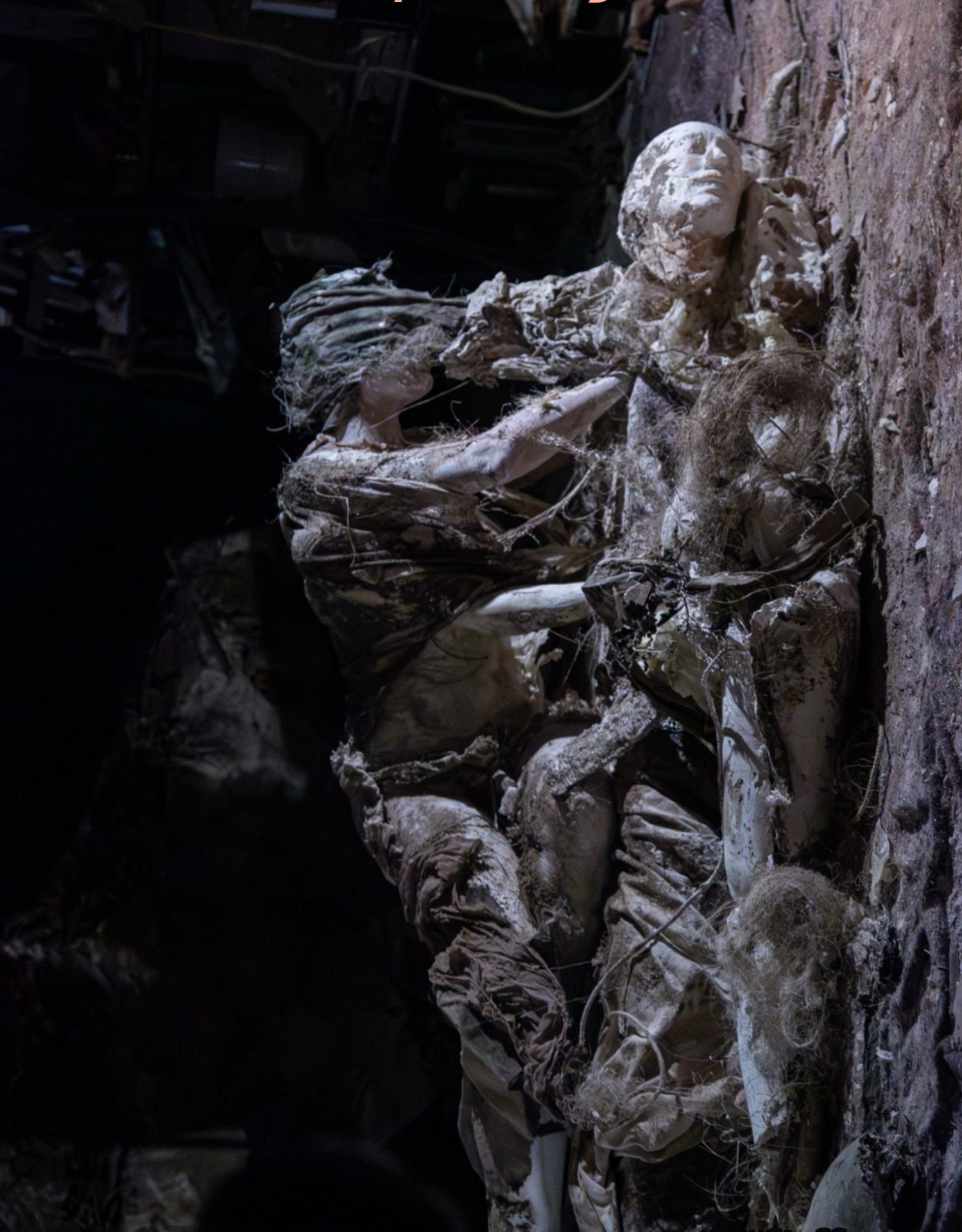
Performative sculptural action. The piece reclaims pagan ritual as a form of relationship between bodies, environment and non-human subjects, taking Agdistis—an intersexual deity linked to the wild—as its central axis. In classical myths, when a hero destroyed a monster (an ancient god), they also erased a way of coexisting with the world. Killing the monster meant imposing order: transforming the hybrid, the diverse and the desiring into something legible and productive.
The performance understands sculpture as a living event in which body, matter, music and environment act together. From a sensibility close to queer theory, identity appears as something fluid and unstable.
Joaquín Jara’s practice understands sculpture as an expanded process in relation to the environment and its material dynamics. His work moves between sculpture, action and ecology through interventions in natural and urban contexts, as well as experimental processes linked to other living agents. The works emerge from situations in which body, matter, time and environment interact alongside human and non-human subjects within the same sculptural operation. Ceramic, wood, bronze, plaster or rope function as material traces of actions connected to ritual, landscape and the transformation of matter.