A customer at a café in London films themselves taking the first bite of a beautifully plated avocado toast. The video makes its way into Instagram and TikTok, a bite translated into bytes, units of information meant to incite desire for content, likes, and never ending consumption. Meanwhile, on the other hemisphere, vast swathes of land are deforested and turned into avocado farms; water taken from local communities to feed thirsty trees. Earth and soil, devoured. Virality shapes and destroys landscapes.
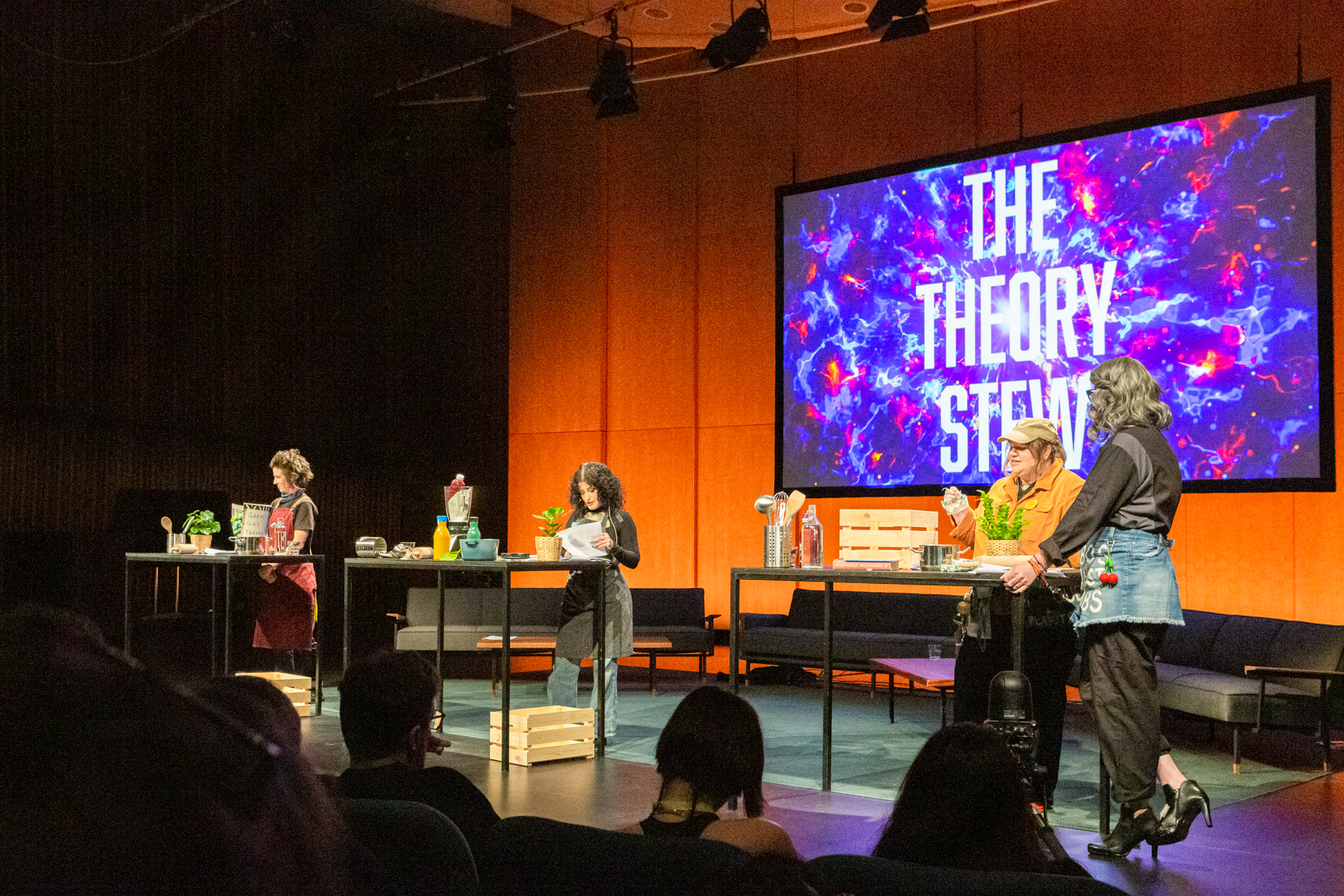
“The Kitchen Network” is a theatrical performance that continues Luiza Prado’s ongoing investigation of the necropolitical infrastructures around reproduction, nourishment, and planetary collapse. The project takes inspiration from food media and art—from Top Chef to Nara Smith, from Martha Rosler to Daniel Spoerri—to dissect desire and virality as key processes situated between the kitchen and the screen, capable of outlining the political infrastructures that determine who gets to live, and who gets to die. The work is situated within a conceptual transition that shifts food from the realm of life to that of the commodity, opening a critical framework to examine the fragmentation of multispecies relations and relationships to territory, as well as their entanglement with capital accumulation. Focusing on this transition offers a critical entry point to explore the fragmentation of multispecies kinships and relations to land and territory, and outlines how capital accumulation becomes entangled with the systematic commodification of species. The performance unfolds as the finale of the last reality TV food competition on a burning planet, presented by the Eternal Entity (an AI host bot) and three judges, mythical entities of folk Brazilian tales: Anhangá (fire), Boitatá (water), and Curupira (forest). The performance employs humour and sarcasm to explore the slippery metaphysical space between the “bite” and the “byte” as frameworks for analyzing environmental concerns, weaving desire and virality as key narrative threads. Through humor and sarcasm, The Kitchen Network adopts the format of televised cooking competitions to articulate a contemporary environmental reflection.
The event taking place at Antic Teatre in Barcelona on March 24, 2026 corresponds to the fourth episode of the series, which continues and completes the research developed by the artist while adapting to each specific context. The first episode, presented within the framework of Transmediale in Berlin (January 2024), emphasized the technological aspects of the project. The second, held in Nottingham (April 2024), focused on the kitchens of migrant communities. The third, presented at the restaurant of the Martin Gropius Bau in Berlin (October 2024), addressed labor and movement through the universe of the sandwich—a food associated with work rhythms and whose culinary origins point to non-native traditions.
For The Kitchen Network. Episode 4, Prado develops a script situated in the context of Barcelona (and, by extension, southern Europe), addressing some of the most urgent issues of the region, such as extreme climatic phenomena (water stress, droughts, heatwaves, wildfires, floods) affecting the traditional production of foods like olives, wine, citrus fruits, and vegetables. This takes into account the fact that agriculture in many areas still relies on models that are insufficiently resilient to an increasingly intense and unstable climate, with high adaptation costs for small-scale farmers. The episode also identifies key needs, including the sustainability and resilience of urban agrifood systems, the reduction of food waste, and greater public awareness around healthier and more balanced diets.
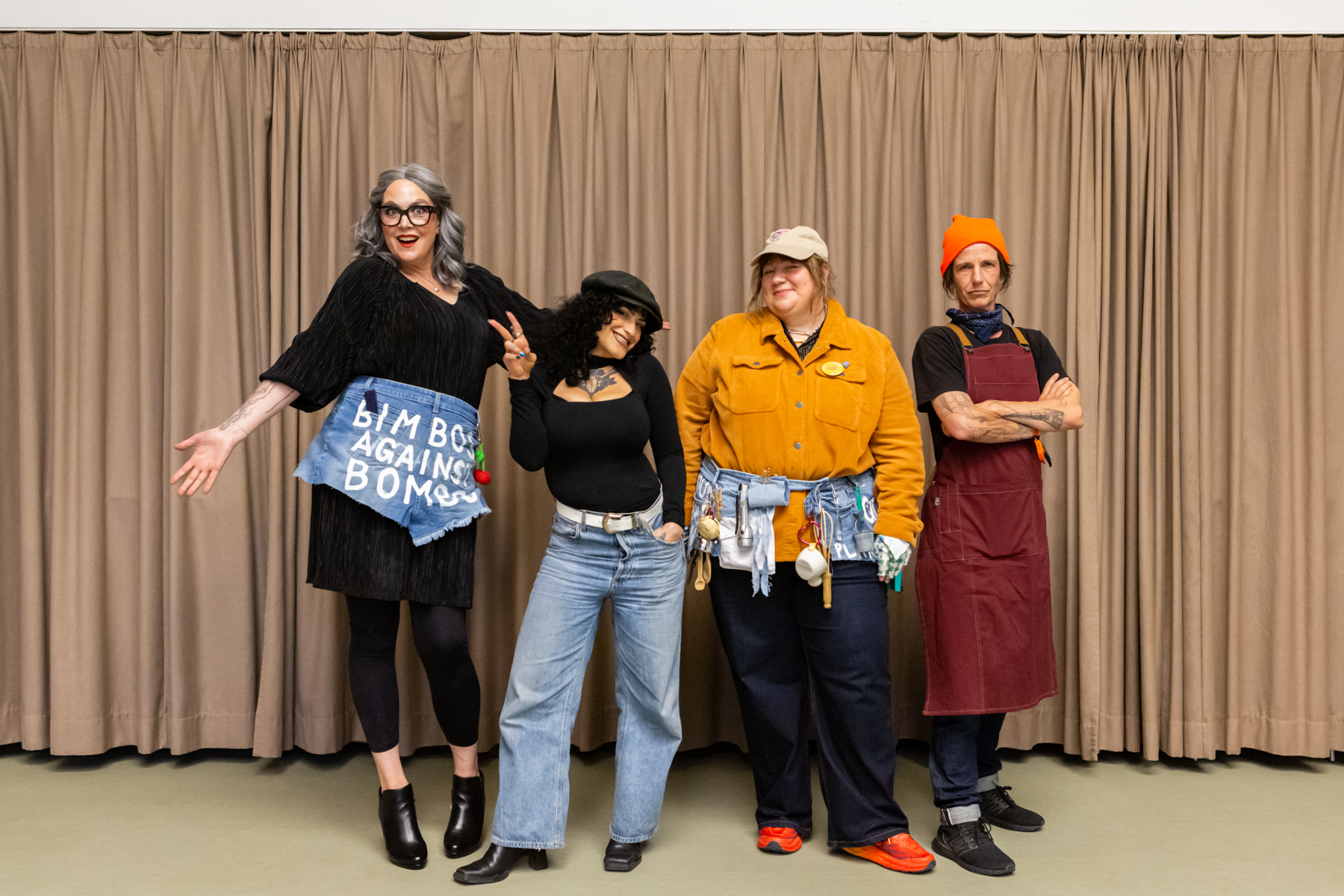
In The Network Kitchen. Episode 4, Luiza Prado assumes the role of director and collaborates with performers and creators from the local scene, who will play the role of contestants. Finally, members of the community of Antic Teatre will take on the role as the jury of this televised competition.
Luiza Prado (Brazil/Germany) is an artist, writer and theorist. She works between installation, sculpture, text, and image, using performance and ritual as a way of invitation and activation for audiences. Her practice explores relations and knowledge between plants, political infrastructures, and technology, and questions what processes are needed for collective concerns of environmental care and reproductive justice. She holds a PhD from the University of the Arts Berlin, and an MA from the University of the Arts Bremen. Her ongoing artistic research project, “Un/Earthings and Moon Landings” starts from the mythology around silphium, an extinct plant used as an aphrodisiac and a spice, to engage with questions around body and territory as sites of extraction within computational, political, and economic infrastructures.